Showing posts with label culture. Show all posts

08 November 2016

Haiku Tuesday!

I have always liked haiku. The challenge of expressing a whole emotion or idea in such a short and constrained manner just appeals to me.
A couple of years ago, I even tried writing a haiku every day for 30 days. I did keep it up for a couple of weeks. I even illustrated most of them. Then it snowed, and I got distracted by playing outside.

I've decided to start writing them again. I won't have a goal as lofty as one day, but I think one a week is realistic. Some of them, okay, most of them, will probably not be very good, but I like to challenge myself and solve puzzles. To me, a haiku is a creative word puzzle. This will help me stretch my brain. Plus, it will be fun.

Why Tuesday? Because it has a "u" in it and sounded better than "haiku Thursday".  So without
further ado:

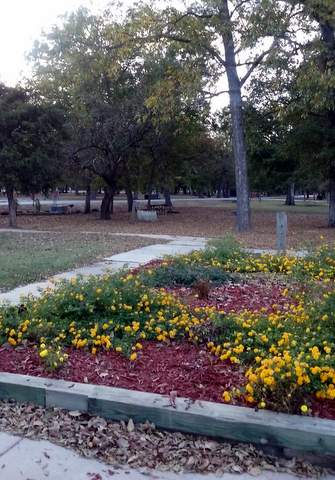
Rains refuse to come
While trees remain clothed in green
Forgotten by Fall

Our weather has been uncharacteristically warm, with very dry conditions. The only leaves on the ground are there from lack of water. There are very few fall colors and the lake is very low. 

Feel like trying your hand at a haiku? Try it out and share the results in the comments!

26 October 2013

My Mail Obssession & It's "Fix"

I love getting mail. Don't you?

When we were younger, my little sister wanted mail so badly that I would hide notes in the mailbox addressed to her from a "Secret Friend." She was too little to know that they weren't "real" letters, and she always seemed so happy to get them. I probably loved giving her those fake notes as much as she liked getting them. Mostly because I like to make my little sister happy, but also because I love mail.
 I liked mail so much that as a kid, I collected both stamps and postcards. Family would give me unsent postcards from places they had been or with pictures they knew I would like, and  I received stamps as Christmas gifts. Often, I would have pieces of my grandma's mail soaking to retrieve the stamps before she knew the mail had been delivered.

My love of mail didn't stop with stamps and postcards. I loved stationery, post-its, note cards, unique papers, weird envelopes, and oddly shaped pieces of mail. I have things like a giant foam kissing lip mailer and  plant-able notecards.

Now that I'm older, I still love sending and receiving mail. When I saw +Postcrossing, I knew I had to sign up and at least give it a shot. Not only have I had quite a bit of fun seeing sights from around the world and across the country, but Postcrossing.com has reminded me of how much I enjoyed collecting stamps and postcards.

Postcrossing is a free website that connects postcard and mail lovers from around the world. From their "About" page:
"The goal of this project is to allow people to receive postcards from all over the world, for free. Well, almost free! The main idea is that: if you send a postcard, you will receive one back from a random Postcrosser from somewhere in the world."

One of my favorite cards, from Taiwan.
I enjoy travel and would love see the world. Realistically speaking, I know that will never happen. Receiving postcards with amazing and unique sights from around the world helps soothe my wanderlust without putting my bank account in intensive care.

Postcards are easy to find, often for $.30 or so. International postage is $1.10. Because I get a card for every card I send, for $1.40 I get to see something new!

The postcards are fun and seeing all the different stamps is a treat. I also hearing from random people all over the world, even just tiny snippets of their life.

Being a numbers and lists kind of person, I really enjoy the section of Postcrossing where it tells you how far the cards have traveled. The postcard above traveled 12,593 km over the course of 10 days in order to reach me. Another card, from India, traveled 13,843 km and took 30 days to reach me.

My current goal is receive at least one postcard from each state in the United States. I have Delaware, Nebraska, California, Ohio, Rhode Island, and Florida. Some are from Fitocracy friends and some are from Postcrossing direct swaps. A direct swap is where if a person has it enabled, you can contact them to request a swap, without having to wait for the Postcrossing roulette to achieve your goal. I was recently contacted by a lady in Australia whose goal is to collect a card from every county in the U.S.!

Check out some of the postcards I have received in my postcard album on Picasa. Even if you think I'm crazy, you're likely to appreciate at least a few of the cards. If you think it sounds fun, head over to Postcrossing and sign up. Maybe our cards will cross.

Viva la Post Office!

09 March 2012

Chapati!

All Aboard! First stop on the bread bus is India! (fun fact, if you're in Arkansas & could dig all the way through the earth, you'd wind up in the Indian Ocean!)

I have a confession. Chapati wasn't my first choice. Originally, I really wanted to make naan. Then I decided to celebrate the upcoming St. Patrick's day, I'd make Irish soda bread, to have something I'd never had. Plans fell through, and I didn't go to town to get buttermilk to make the soda bread. Naan takes yogurt, so that was also out.

On the same page as naan in my Indian cookbook is chapati. Doesn't take anything I don't already have and as an added bonus it lets me use up the odd bit of whole wheat flour I have left.

According to my Indian cookbook, and various websites, chapatis are the "daily bread" type bread for Indian homes. Some time on the internet has made it clear that it is a fairly common bread in most south Asian countries. I even saw some references to it being eaten in Kenya and other north African countries, with several variations: diameter, thickness, puff-factor, and so on. I went with the Indian recipe that I found the most often. It was almost identical to the one in my cookbook.

Chapati

2 c. whole wheat flour
1 tsp. salt
2 tbsp. oil
water or milk
I used a mix of water and milk, & wound up needing a little over 2/3 c. of liquid.

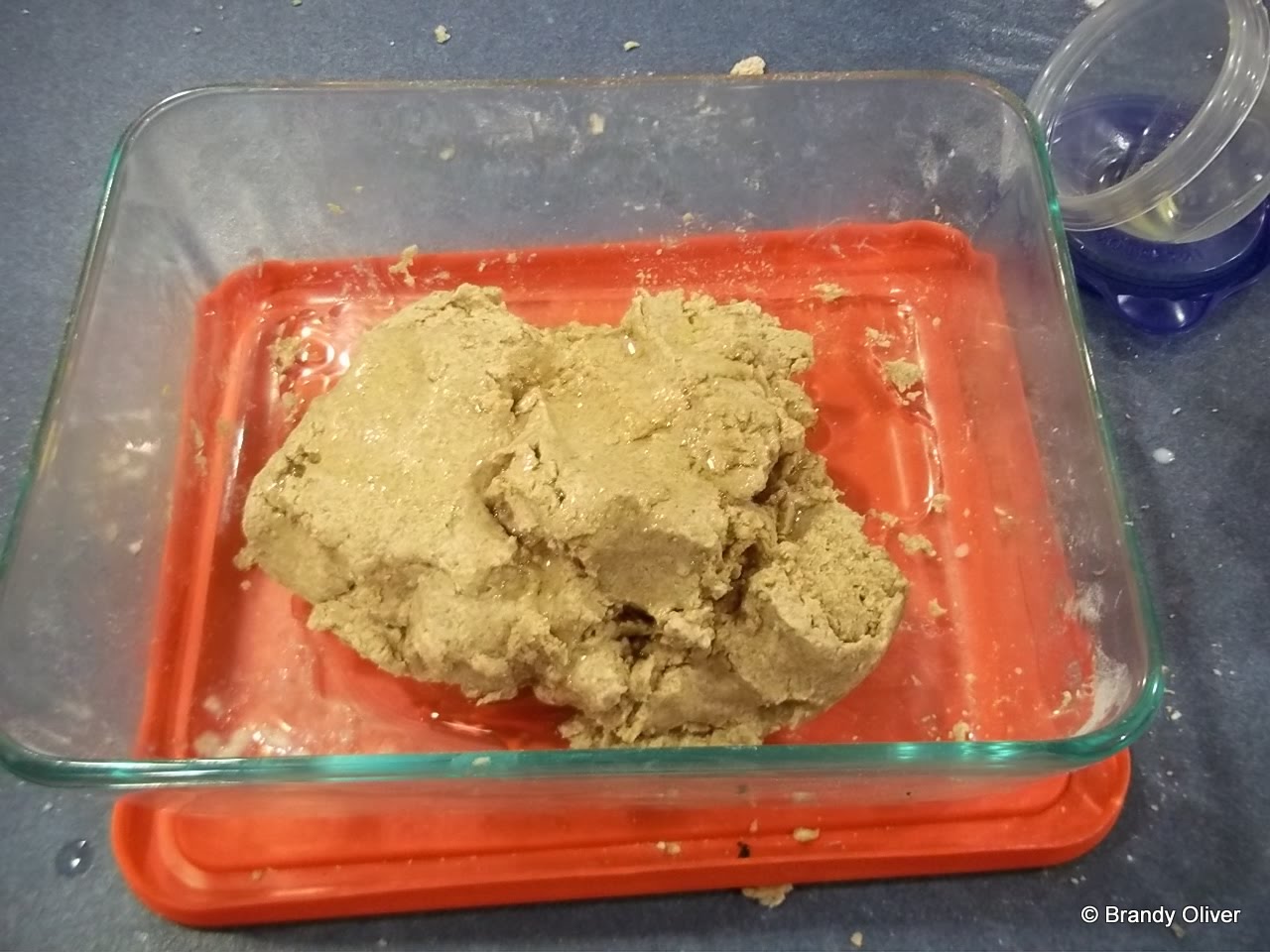
First, mix together the salt and flour. Make a small well in the dry ingredients. Slowly add the milk or water until you form a dough that's elastic but not sticky. Once you have the dough mixed up, add the oil and knead it in.


Separate the dough into portions about the size of a golf ball. Roll each ball until it's round and totally seamless. Once the dough is divided and rolled smooth, let it rest for about 20 minutes. After the dough's had a nice rest, roll the balls in a little bit of flour, to keep it from sticking.


Smoosh the ball(yes, that's a technical term) with your hand to make a round dough circle. Then with a rolling pin, soup can, or whatever is handy, use a circular motion to roll the dough into a thinner dough circle. You want it to be about 1/8" or so thick. A little thicker is better than too thin.
A griddle or a big cast iron skillet works great for cooking them. (wait, I guess I can't call this "baking" around the world, oh well) Warm the griddle/skillet to medium heat. On my knobs that go from 1 -10, I had it on 7 the whole time. It worked well.


See the little bubbles popping up on it? When you start seeing lots of tiny little bubbles, you flip it over. Watch it carefully because that only takes around 20-30 seconds to happen. If you get bigger bubbles, like in the picture, you let it wait a few seconds too long. It's not the end of the world, just flip it quick, before it's the end of the chapati!


Once it's flipped, it only needs to cook for about another 20-30 seconds.

I tried several of the many utensils scatter about my kitchen. My really big cooking chopsticks that came with my wok wound up being the best for flipping the chapati. I thought I'd use tongs, but they just scooted the bread around. My spatula took some maneuvering, but it ripped the edges more.


Yum!
I had chapati with my curry and rice for dinner. I read in several places that chapati is often used as an eating utensil to scoop up food as you eat it. I don't know the accuracy of this statement, but it's how I ate my dinner and boy, it was good stuff!


This recipe was wrangled out of "The Complete Book of Indian Cooking" by Shehzad Husain & Rafi Fernandez. I didn't use the exact recipe as printed. I made changes based on several different sources. Also, my chapati are not nearly as perfectly round as theirs. This makes me sad. Despite that, it's a very cool book.

08 March 2012

World Travelin'

One day, I'm going to travel all over the globe: Australia, Germany, India, Thailand, Egypt, everywhere! Even though that is a long time off for me, it doesn't stop me from pretending! :)

I recently went to Tulsa, OK for work. A coworker and I decided to "eat around the world while we were there. We had a really good time doing it and probably ate just a little too much. (Good thing we also decided to work out together!)


Not pictured: the sinful German dessert!

Japanese is always one of my favorites.
Vietnamese got "Holy COW, that's a lot of food!"
 We also had Greek, Italian, Mexican, Indian, and others. They were nearly all delicious. There was actually only one I didn't really like. It was the night we were stuck eating at the convention center. I had a hot dog. Not just a normal hot dog, but a GINORMOUS salty, tough thing in a slightly harder than ideal bun. I drowned it in relish and washed it away with a $5 Dr. Pepper. *shudder* We called it our "Chicago meal."


Anyway, our little culinary expedition was an inspiration. Okay, to be honest, the naan at the Indian restaurant probably did most of the inspiring. (It was THAT good.) When I got home, I decided I wanted to make my own naan. When I started looking up naan recipes, I found several other neat and yummy sounding breads from various countries and cultures.

I decided quite a while back to make all my own bread. I've done really well with that. In the past year, I can count on one hand all the bread I've actually bought. To up my baking skills and have a little more fun in the kitchen, I started a new project.

I've decided I'm going to "bake around the world." I want to make the traditional and ethnic breads of as many countries(territories, colonies, & dependencies) as I can. I'd like to make them as authentically as possible. Given that I'm from a very small town with limited fund, there will  be some corner cutting.

I also plan on learning more about the countries I bake from from Albania to Zimbabwe, but in no particular order.

If you have any suggestions or recipes, please share!